
behind the story
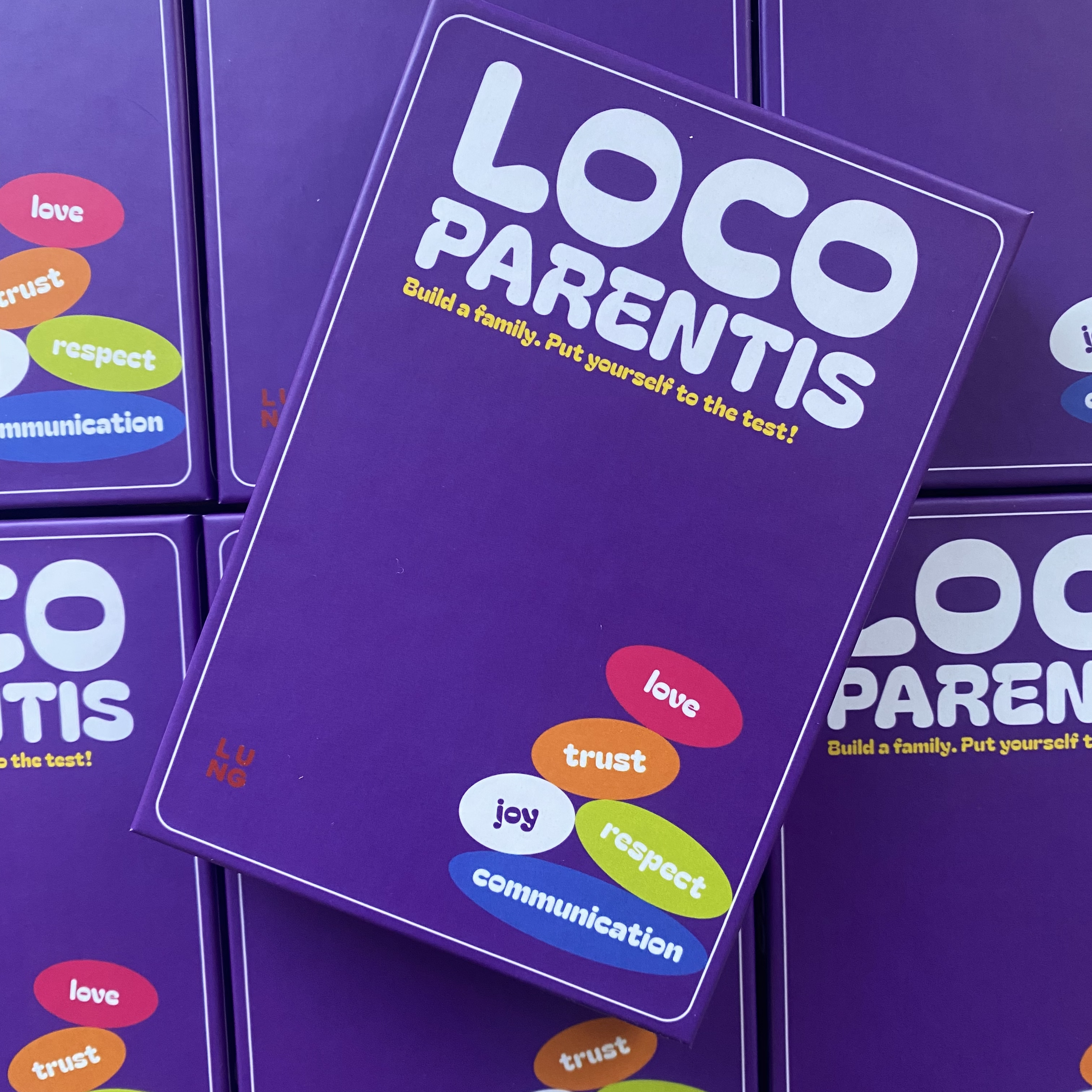
What is Loco Parentis
While making our production The Children's Inquiry with care-experienced young people, we discovered a real need for practical tools to help build genuine connections within the care system. The wider issue was clear: a lack of relationship-based models meant that care often felt transactional rather than real.
How to Build a Family grew from that need, and LOCO PARENTIS grew from that.
LOCO PARENTIS (Latin for "in place of the parent") is a fast-paced party game that centres young people's voices on what truly makes a family. Because family isn't always about blood—it's about the people who show up for you.
We reached 2,770 students through workshops and assemblies across schools in Winter/Spring 2025, consulting with them on what makes a good game and what care means to them. The responses were astounding! All young people have valuable insights about what it takes to feel seen and loved in a family setting, whatever it may look like.
the card game
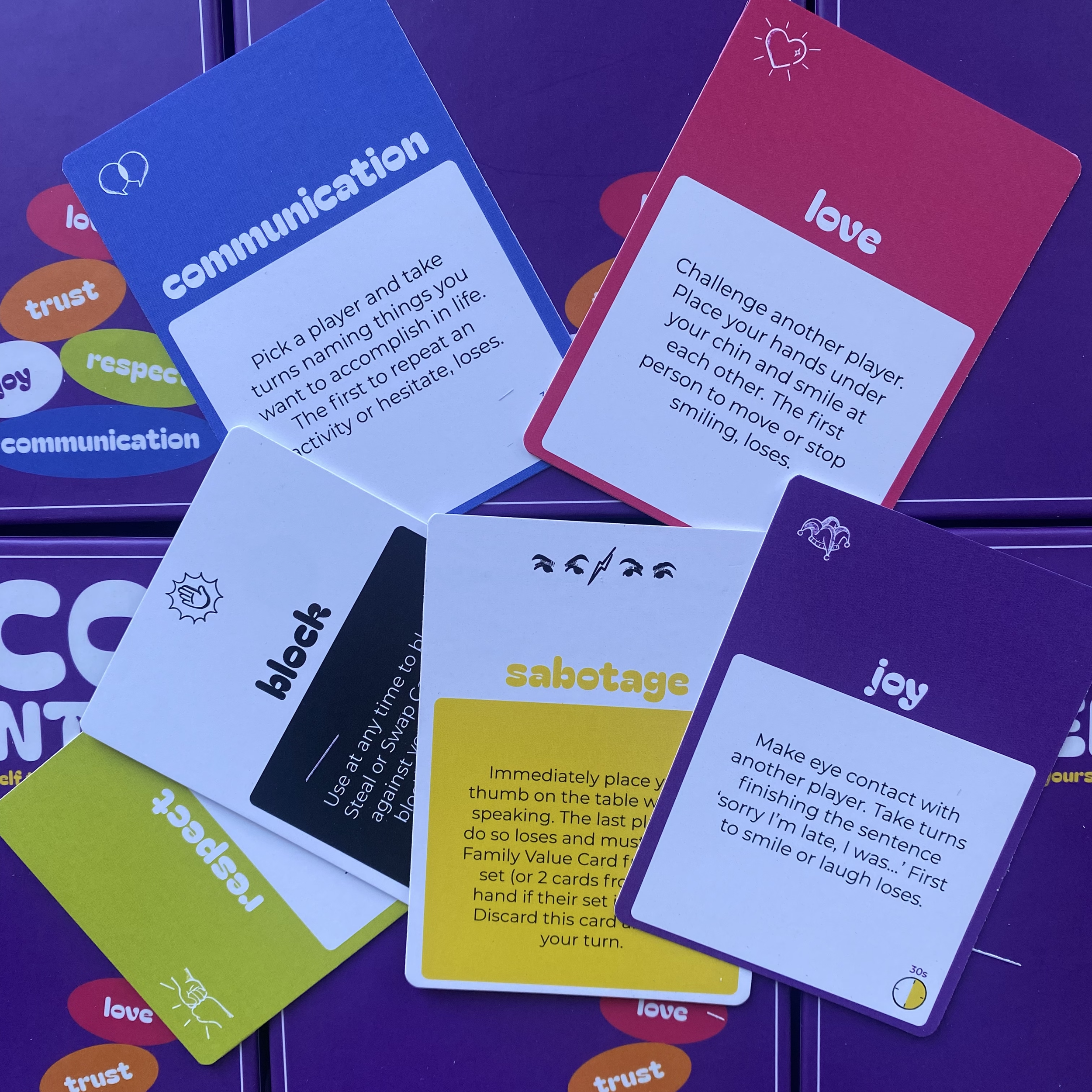
At the heart of the project is a card game (featuring 95 playing cards built around five core family values: Communication, Trust, Love, Respect, and Joy) that we co-designed with Creative Associates Tamara Browne and Tom Hume-Steer, alongside key consultant groups of care-experienced young people.
Young people we worked with consistently showed us that they know exactly what they need to thrive—they just need the adults around them to listen and create the right conditions for relationships to grow.
Players compete through hilarious, heartfelt, and sometimes tricky challenges to collect a set of all 5 Family Value Cards, whilst navigating Chaos Cards that let you meddle with other players and Sabotage Cards that disrupt the game with silent thumb races. It's about testing your bonds, blocking out the chaos, and finding out who's the boss of the family frenzy.
Working with Heedayah Lockman as our fantastic illustrator brought the five family values to life with vibrant, playful imagery that makes each card feel special.

This project is kindly supported by the University of Nottingham.